
A daughter in Peterborough gets a quick phone update about her father’s medication change. She hangs up, then wonders a simple but important question, who else heard that information, and where else might it end up? That moment is where health information privacy becomes real, because home care happens in living rooms, hallways, kitchens, and phone calls, not just in clinics.
Families across Durham Region, Peterborough, Northumberland, and surrounding areas in Ontario ask these questions every day. They’re normal questions, not signs of mistrust. In home care, privacy is part of respectful care, because every visit note, medication list, and family update can carry details a person may not want shared too widely.
Table of Contents
- Why Health Information Privacy Matters at Home
- What Counts as Personal Health Information
- Your Rights Under Ontario’s PHIPA
- What Home Care Teams Can Share With Family
- How Carevo Protects Your Loved One’s Information
- Practical Privacy Tips for Families and Caregivers
- What to Do If a Privacy Breach Happens
- Frequently Asked Questions and How to Reach Us
Why Health Information Privacy Matters at Home
A home-care worker arrives, takes notes, checks a pill organiser, and leaves a message for the nurse coordinator. Later, a family member asks who can see that note and whether the change in medication was shared with anyone else. That question sits at the heart of health information privacy, because the home is also a care setting, and care settings create records.
Privacy is part of everyday care
Ontario’s Personal Health Information Protection Act (PHIPA) came into force on November 1, 2004, and it is the core law governing the collection, use, and disclosure of personal health information by health information custodians in the province. It matters in home care because it applies to care delivered in community and home settings, not just hospitals. It also gives people the right to access their records and request corrections, which makes privacy a practical right, not just a legal concept. PHIPA background and Ontario context
Practical rule: if a detail connects a person to their health, care, or payment, it deserves careful handling.
For families, that means questions are reasonable and useful. A daughter asking who saw her mother’s visit notes is not being difficult. A spouse asking how a schedule change was documented is doing the kind of oversight that helps care stay safe and respectful.
The home-care setting makes this especially important because information moves in small pieces. A note left on a table, a phone call on speaker, or a calendar update sent to the wrong person can expose more than intended. Privacy protection keeps those routine moments from becoming unnecessary problems.
For readers trying to understand how home support works, this overview of home health care services can help connect the privacy piece to the broader care picture.
What this article helps families do
Readers will come away with a plain-language grasp of:
- What PHIPA protects, in ordinary home-care situations.
- What rights clients and families have under Ontario law.
- What a home-care team can share, and what should stay private.
- What families can do themselves to make privacy easier to manage.
That understanding matters because good privacy habits build trust. They also make it easier for seniors to accept help, for caregivers to coordinate well, and for providers to keep care calm, dignified, and clear.
What Counts as Personal Health Information
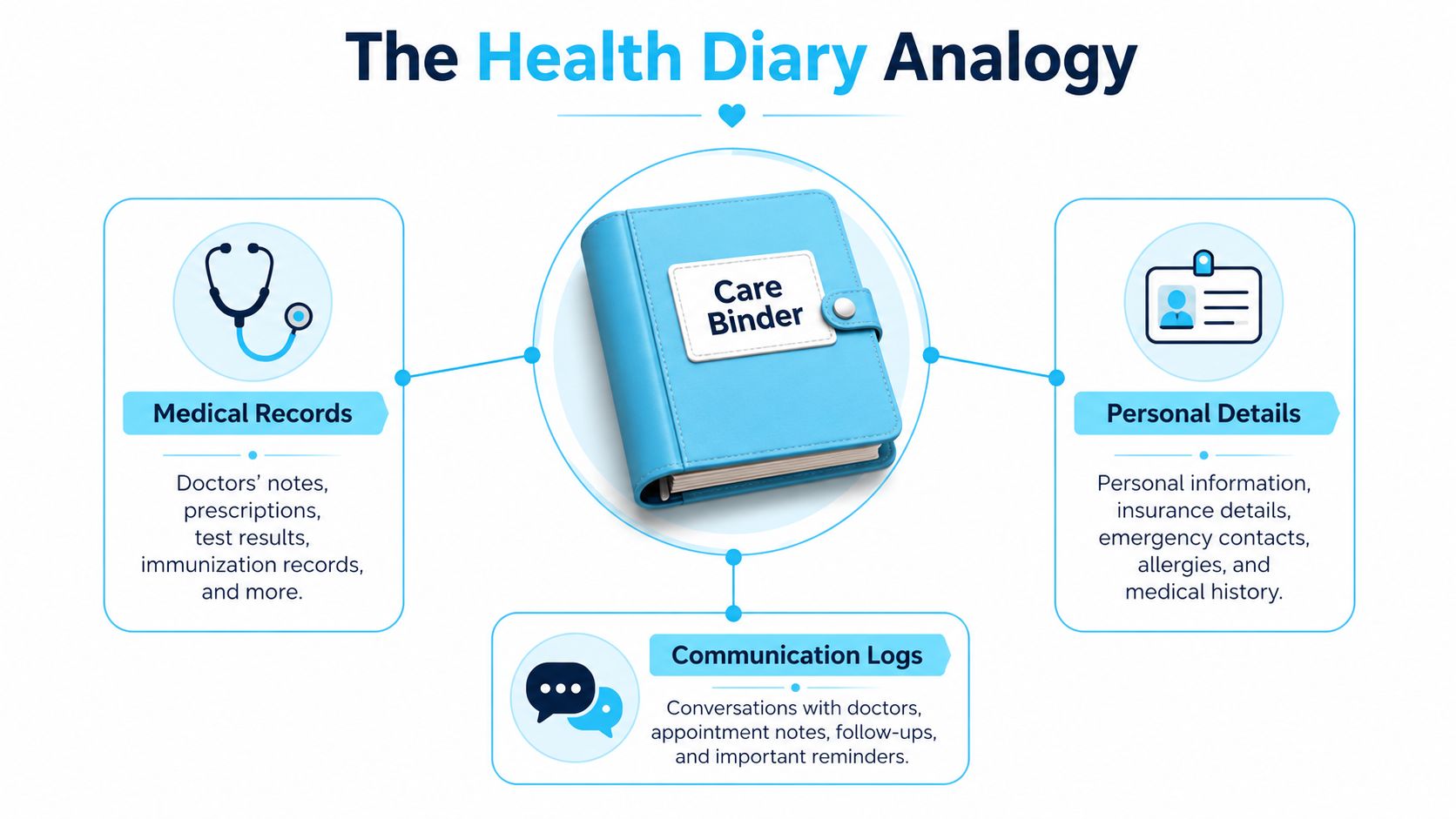
A home-care binder can help people picture personal health information in ordinary terms. It may hold lab results or a doctor’s letter, and it may also include medication lists, bathing preferences, family contacts, visit schedules, and notes about how someone is doing after a change in care.
The rule is broader than many families expect
Ontario treats almost any information that identifies a person and connects them to health status, care, or payment as personal health information. In home care, that reaches beyond what people usually label as “medical.” A scheduling note with a client’s name, a family contact list, or a comment about medication timing can all fall into that category if the detail is tied to an identifiable person. Ontario privacy and PHI basics
Home-care teams cannot treat those notes like ordinary service paperwork. A comment about whether someone needed help with meals may sound routine, but once it is attached to a named client, it becomes part of a regulated health record.
Why this matters in real homes
Home care works through many small handoffs. A Personal Support Worker may note what was needed during a visit. A nurse may update a care plan. A coordinator may call a family member. A substitute decision-maker may ask for a summary. Each touchpoint is useful, and each one also creates privacy responsibilities.
Families are often surprised by how wide that circle is. They may assume only a nurse’s chart is private, when a shared calendar, a voicemail, or a printed medication list can also carry protected details. Keeping that broader view in mind helps everyone avoid accidental disclosure.
For families comparing service roles, this guide to what a Personal Support Worker does can help explain why even everyday support tasks can involve sensitive information.
Useful shorthand: if a document, call, or note would make sense only because it belongs to a specific client, treat it as health information.
That habit makes privacy easier to manage. It also helps seniors and caregivers feel more comfortable opening their home to support, because they know the information moving through that support is being handled with care.
Your Rights Under Ontario’s PHIPA
PHIPA gives Ontario residents real rights over their own health information. Families in Durham Region, Peterborough, Northumberland County, and the Bay of Quinte rely on those protections every day, especially when a loved one needs help tracking medications, appointments, or care changes at home. The law is not there to block care. It’s there to make sure care happens with respect.
The main rights families should know
-
Right to know how information is used. A client can ask how their personal health information is being collected, used, and shared. That helps families understand why a coordinator asked for a certain detail or why a nurse documented a visit in a specific way.
-
Right to access records. A client can ask to see their own records. In a home-care setting, that might mean asking for a copy of a care plan or visit summary.
-
Right to request corrections. If a record is wrong or incomplete, the client can ask for it to be corrected. That matters when contact details, medication information, or preferences change.
-
Right to consent to sharing. PHIPA places control with the client unless another legal authority applies. That means a provider should be clear about what will be shared, with whom, and for what purpose. PHIPA consumer rights summary
A few common home-care examples
An adult child may ask for a copy of a parent’s care plan so the family can support evening routines at home. A senior may want to know which staff members have viewed a file. A substitute decision-maker may ask whether a note from a visit can be corrected because the medication list is out of date. Those are all reasonable questions.
The key point is simple. The rights belong to the client first, and the provider’s role is to help exercise those rights, not gatekeep them.
If a family is unsure how access or consent works in practice, this qualification guide for home health care can help frame the kinds of records and conversations that often come up during intake and ongoing support.
Good providers make rights usable. They explain records plainly, answer access questions without defensiveness, and correct mistakes promptly.
That’s especially important in home care, where family members often handle the details of daily life. Clear rights make it easier to coordinate meals, medication reminders, and visits without guessing who can see what.
What Home Care Teams Can Share With Family
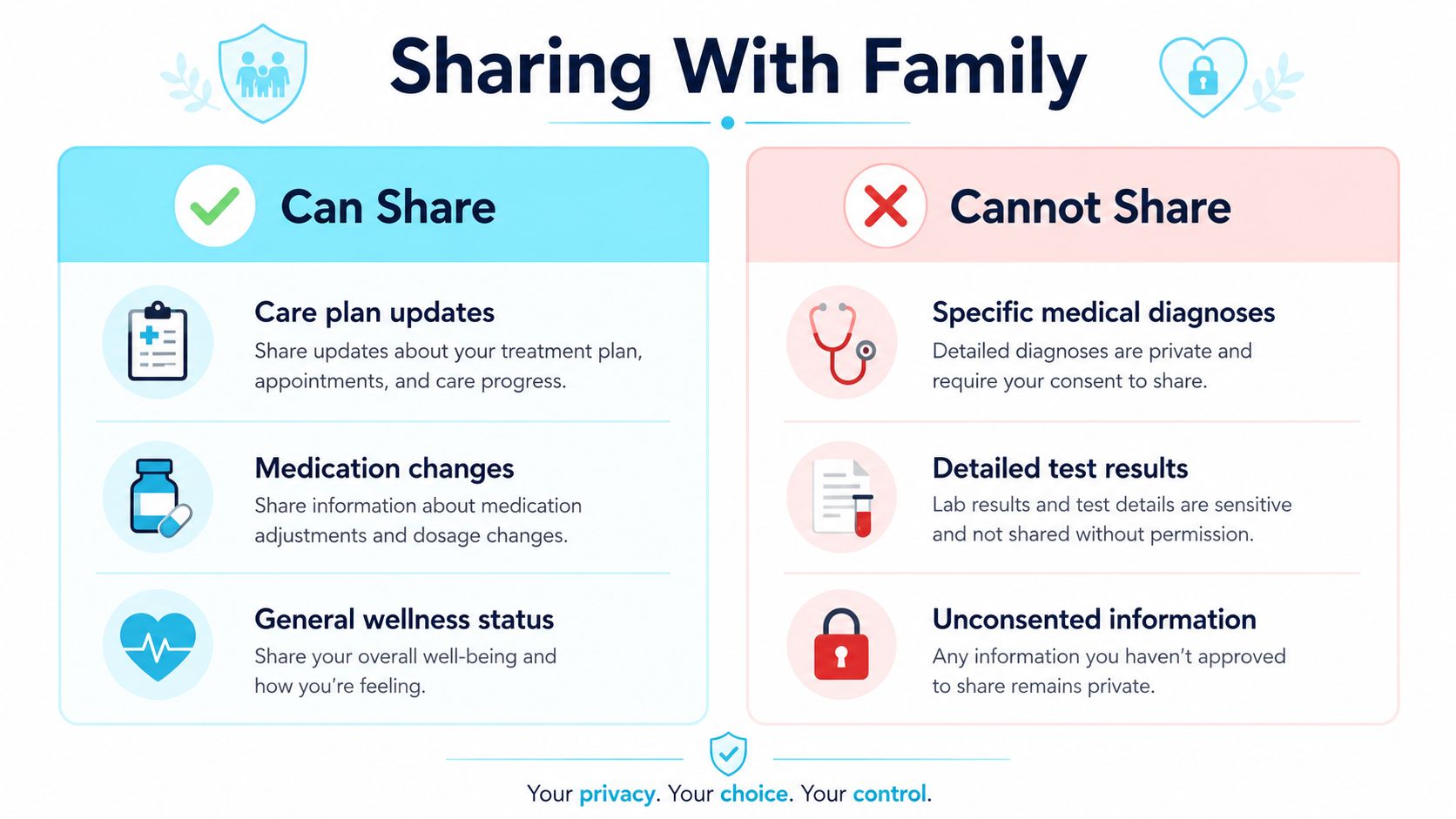
This is the question many families ask first, and it’s the one most public privacy content leaves vague. A home-care nurse often can share enough to support safe care, but not everything a relative wants to know. The line sits between care coordination and unnecessary disclosure.
Care coordination versus over-sharing
A nurse coordinator can usually confirm practical details that help the home run smoothly. A family member may need to know whether the visit time changed, whether a medication was adjusted, or whether the client is generally doing well enough for a regular routine to continue.
That is very different from discussing a diagnosis in front of visitors, sharing detailed test results without permission, or repeating personal information that the client has not agreed to share. Canada’s privacy approach emphasises minimum necessary disclosure, which means sharing only what is needed for the purpose, not everything available. Canadian privacy and consent analysis
Two simple scenarios
Scenario one, appropriate sharing. An adult child answers the phone and asks whether the evening caregiver is still coming. The coordinator confirms the visit time and says there was a medication change that the family should watch for.
Scenario two, too much information. The same adult child asks about the visit, and the coordinator begins describing the parent’s diagnosis, detailed symptoms, and unrelated background history while other visitors are in the room. That goes beyond coordination and can cross a privacy line.
Blanket consent forms don’t solve that problem on their own. Consent should still be tied to context, the person receiving the information, and what the person would reasonably expect to hear. A substitute decision-maker may have broader authority, while an adult child helping with meals may only need a brief update.
For families who want a clearer picture of who handles these conversations, this overview of the care coordinator role shows why one point of contact often helps keep privacy and communication consistent.
Helpful prompt for families: “Can you tell me how Dad is doing today without naming his medications in front of visitors?”
That kind of question sets a boundary without making care awkward. It also gives staff a clear path, which usually makes communication better for everyone.
A quick guide families can use
- Can share, with the right authority. Care plan updates, medication changes, general wellness status.
- Cannot share without permission. Specific diagnoses, detailed test results, unrelated family information.
- Ask before assuming. If the update is for safety, ask for the minimum detail needed.
How Carevo Protects Your Loved One’s Information
A privacy program only matters if families can see it working in ordinary care. In home care, that means the way staff speak in a hallway, how a chart is stored after a visit, and who is allowed to hear an update when an adult child calls for reassurance. Under PHIPA, providers need administrative, physical, and technical safeguards, because health information can live on paper, in mobile devices, in phone calls, and in digital records.
Three layers of protection families can notice
Administrative safeguards are the rules and habits behind the scenes. They include privacy training, clear consent practices, and one person or team who handles privacy questions. In a home-care setting, they also shape when staff pause and ask before discussing a health update with a family member.
Physical safeguards are the practical barriers around paper and people. Files should stay out of sight, printed notes should be handled carefully, and paper should be disposed of securely. Controlled access matters too, because anyone who enters a home or office does not need to see a care plan.
Technical safeguards protect digital information. Role-based access means staff see only the records they need for their job. Encryption and audit logging help reduce the chance of improper viewing and make it possible to check who accessed a file.
What families often experience in practice
Good privacy practices are often quiet, but they are easy to notice once you know what to look for. A consistent caregiver team means fewer people need access to a client’s file. A nurse coordinator sends updates through approved channels instead of relying on casual messages. Care plans stay in a secure folder, not on the kitchen counter or fridge where visitors can read them.
Carevo Home Health Care uses PHIPA-compliant practices and clear care coordination processes, so privacy is built into the service rather than treated like an extra task. That matters because families want dignity, not just information. It also helps answer a common family-caregiver question, what can a home-care nurse say to an adult child, and what needs the person’s consent before it is shared?
For families comparing providers, this guide to home health care agencies for local families can help frame what to ask about privacy, communication, and oversight.
What to listen for in a provider: clear answers, careful record handling, and staff who know when not to share.
That combination protects the person receiving care and the family supporting them. It also reduces the small communication errors that can erode trust over time.
Practical Privacy Tips for Families and Caregivers
Privacy gets easier when the household uses a few simple habits. Most of them are less about rules and more about respectful routines. The goal is to make sure the right people hear the right information, at the right time.
Small habits that help at home
| Situation | Simple Privacy Habit |
|---|---|
| At the front door | Ask who is visiting before letting anyone in, and make sure staff wear clear identification. |
| In shared spaces | Keep care plans, medication lists, and appointment notes in a folder, not in open view. |
| During phone calls | Use a quiet room for updates, especially if visitors are present. |
| With video visits | Check who is in the background before discussing personal details. |
| After a visit | Put paper notes away right away, then shred anything that doesn’t need to be kept. |
What families can say out loud
A privacy conversation doesn’t need to feel formal. It can sound like, “Please call this number only for care updates,” or “Please speak to the substitute decision-maker about medication changes, not to every family member who drops by.” Those are polite boundaries, and good teams respect them.
Passwords matter too, especially for shared email accounts and patient portals. If a care team sends forms or instructions digitally, the family should know who can open them and where they’re stored. That same care should apply to voicemail, text messages, and printed schedules left near the phone.
Families also help by asking caregivers how notes are stored after a shift. A simple question, such as whether paper notes are removed from the home or placed in a secure folder, can prevent confusion later.
A few habits worth keeping
- Limit casual disclosure. Don’t discuss private updates in front of neighbours, visitors, or grandchildren unless the client wants that.
- Dispose of records carefully. Throwing out a medication list in the regular bin can expose more than expected.
- Set expectations early. One honest privacy conversation at the start of care is easier than correcting misunderstandings later.
The same habits protect the family’s own information, too. If contact details, health concerns, or scheduling preferences are shared with the care team, those details deserve the same respect as the client’s records.
What to Do If a Privacy Breach Happens
Most privacy incidents in home care are small, but they still matter. A misplaced binder, an overheard call, or a message sent to the wrong number can create real worry for a family. The best response is calm, quick, and documented.
Steps to take right away
- Notice and write down what happened. Record the date, the type of information involved, and who may have seen or heard it.
- Contact the provider immediately. Ask for the privacy lead, nurse coordinator, or another named contact who handles privacy concerns.
- Ask what is being done to contain it. A strong response should include quick action to limit further exposure and a review of what went wrong.
- Follow up in writing. Keep a brief record of the concern and the provider’s response.
Under Ontario’s privacy oversight system, providers may need to report certain incidents to the Information and Privacy Commissioner of Ontario, and affected individuals should be notified when appropriate. The IPC is an independent office families can contact if a concern isn’t being addressed properly.
What families should expect from a good provider
The best providers don’t become defensive when a concern is raised. They explain what happened, take steps to fix it, and adjust their process so it doesn’t happen again. Reporting a concern should never put a loved one’s care at risk.
Calm reporting protects care. A family that speaks up early gives the provider a chance to contain the issue and restore trust.
That approach is especially important in home care, where relationships are close and communication often happens quickly. A prompt response can turn a stressful mistake into a manageable correction instead of a lasting problem.
Frequently Asked Questions and How to Reach Us
Can a family choose who the caregiver shares information with? Yes, within the client’s wishes and legal authority. The care team should know who is approved for updates and who is not.
What if the client can’t make decisions alone? A substitute decision-maker may be involved, but providers should still share only what’s needed for care and in line with Ontario privacy rules.
How long are records kept? Retention depends on the provider’s policies and legal obligations. Families can ask how records are stored and how access requests work.
Can privacy questions be asked at any time? Yes. Good care teams expect them, and they should answer without making families feel difficult.
Carevo Home Health Care supports families across Durham Region, Peterborough, Northumberland County, and the Bay of Quinte with home care that includes privacy, communication, and personal support. Families who want a calm, no-pressure conversation can speak with the care team for guidance that fits their situation.
Carevo Home Health Care provides personalized support, skilled nursing, dementia care, and senior care with privacy practices built into everyday communication. Families who want help balancing safety, consent, and dignity at home can visit Carevo Home Health Care to connect with a care team that understands these questions and answers them plainly.